Vallecas Stadium Guide: A Stadium Blended into the Neighbourhood
Three stands, no car park, no online tickets and a queue that starts the night before. A first-hand guide to Estadio de Vallecas, where Rayo Vallecano play and the neighbourhood watches from its balconies.
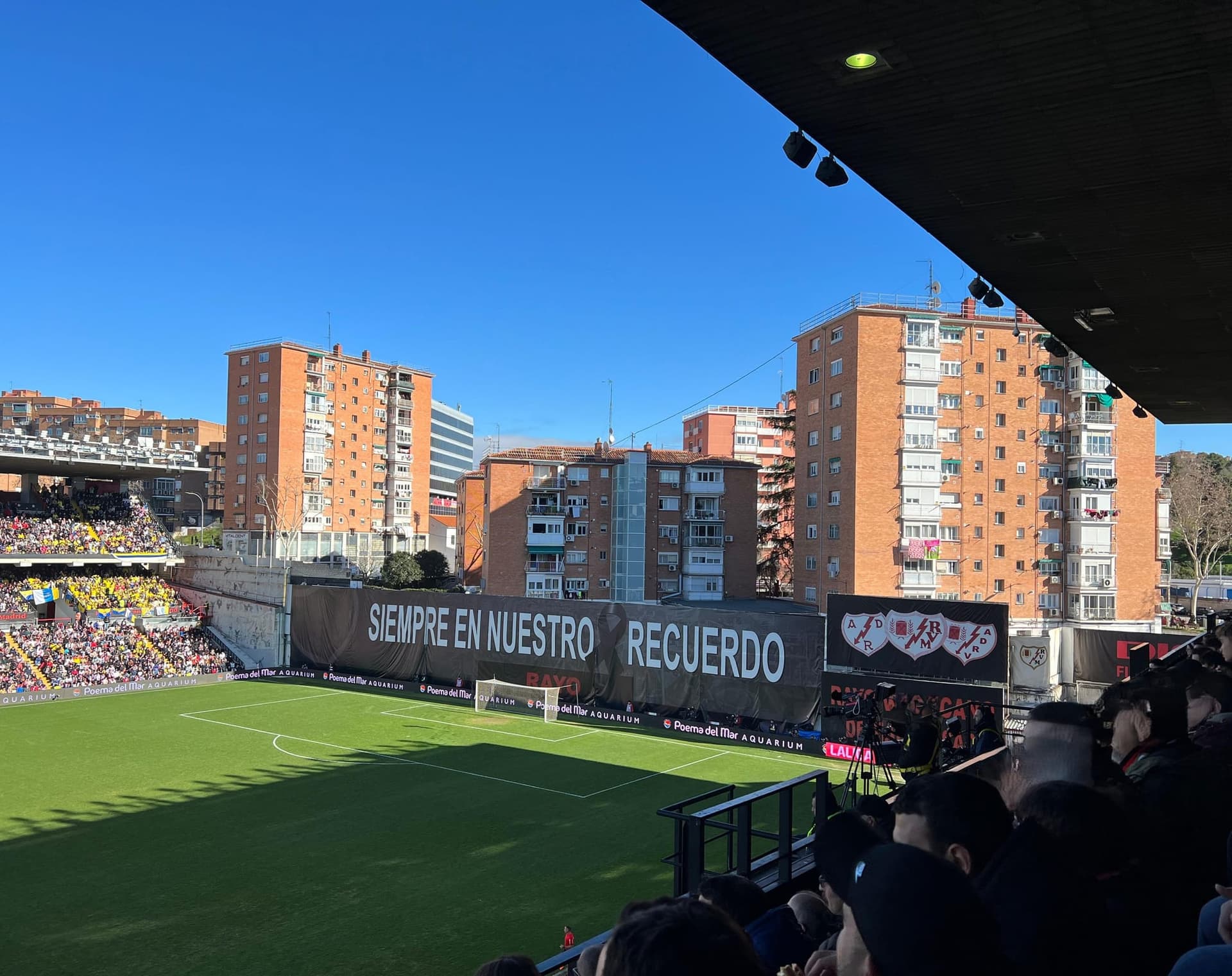
When a football fan visits Madrid, one of the first places they'll head to is the Santiago Bernabéu and the Metropolitano. But a true football connoisseur won't be satisfied with just these two major stadiums and the trophies they house; they'll also want to see something more local, less touristy and more passionate. The Vallecas Stadium is the perfect destination for such connoisseur supporters.
The short version: Rayo Vallecano play at the Campo de Futbol de Vallecas, a 14,708-seat ground on Avenida de la Albufera and the smallest in LaLiga. It has three stands rather than four, so the balconies of the neighbourhood look straight onto the pitch. Take metro line 1 to Portazgo, roughly 20 to 25 minutes from Sol. Tickets cannot be bought online: you queue at the ground a few days before the game. There is no car park. The Bukaneros stand in the Fondo, the Preferencia and Lateral are where people sit, and the one rule worth memorising is that you do not photograph the ultra groups before kickoff. Everything below is the detail.
The Vallecas Neighbourhood and Madrid
In my personal opinion, if you're in Madrid and have the chance, you absolutely must watch a Rayo Vallecano match. Rayo Vallecano are a working-class neighbourhood team with one of LaLiga's smallest stadiums. Precisely because it's a genuine neighbourhood team, it embodies many of the neighbourhood's characteristics.
The Vallecas neighbourhood is situated south of Madrid, just outside the M30 ring road. The vast majority of the neighbourhood's residents are immigrants. These include people from small towns across Spain, as well as immigrants from Latin America and North Africa. We could say this makes the neighbourhood quite a colourful place. Contrary to common preconceptions, the Vallecas neighbourhood is actually a very safe place.
Vallecas, which has remained a working-class neighbourhood ever since the time of the Civil War, has always been one of the bastions of left-wing and socialist culture, no doubt partly due to its immigrant population. As the overwhelming majority of the neighbourhood's residents belong to the working class, it comes as no surprise that this culture prevails here.
And when all these characteristics come together, we are presented with a team that is rooted in the working class, includes migrants, and boasts a fan base of socialist and left-wing supporters: Rayo Vallecano.
Understanding Rayo Vallecano
Yes, this is a stadium guide, and here I'll be sharing all the secrets I know about this stadium with you. However, anyone going to this stadium to watch a match needs to understand Rayo Vallecano. This team, home to the Bukaneros supporters' group, is one of Madrid's oldest football clubs. Almost all of the team's supporters are residents of the Vallecas neighbourhood.
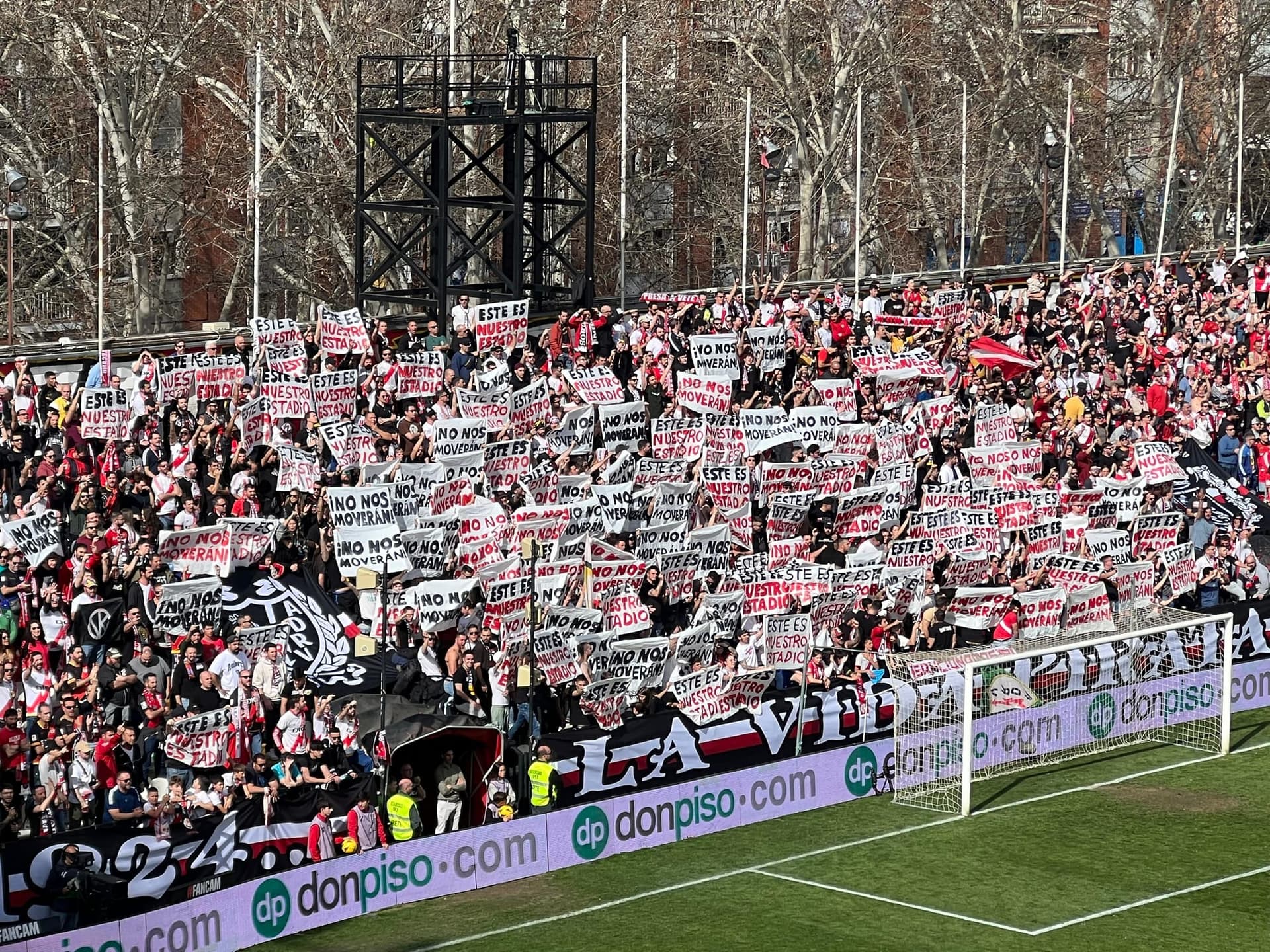
If you're going to a Rayo match, the most important thing you need to know is that this team's supporters lean towards left-wing views, and that your race, sexual orientation or age are of no importance to them whatsoever. What matters to them is how much respect you show them and a little smile. Oh, and a bit of beer too. If you've got all that, you'll really enjoy the match and have some lovely chats with the supporters.
Estadio de Vallecas: A Look at the Stadium and Its Features
Estadio Vallecas is situated in the Vallecas neighbourhood, on Albufera Street. One of the most interesting details about this stadium is the absence of an east stand. Some lucky people can watch the matches from the balconies of the buildings on either side without needing a ticket. On derby days, these balconies are packed with home and away supporters.
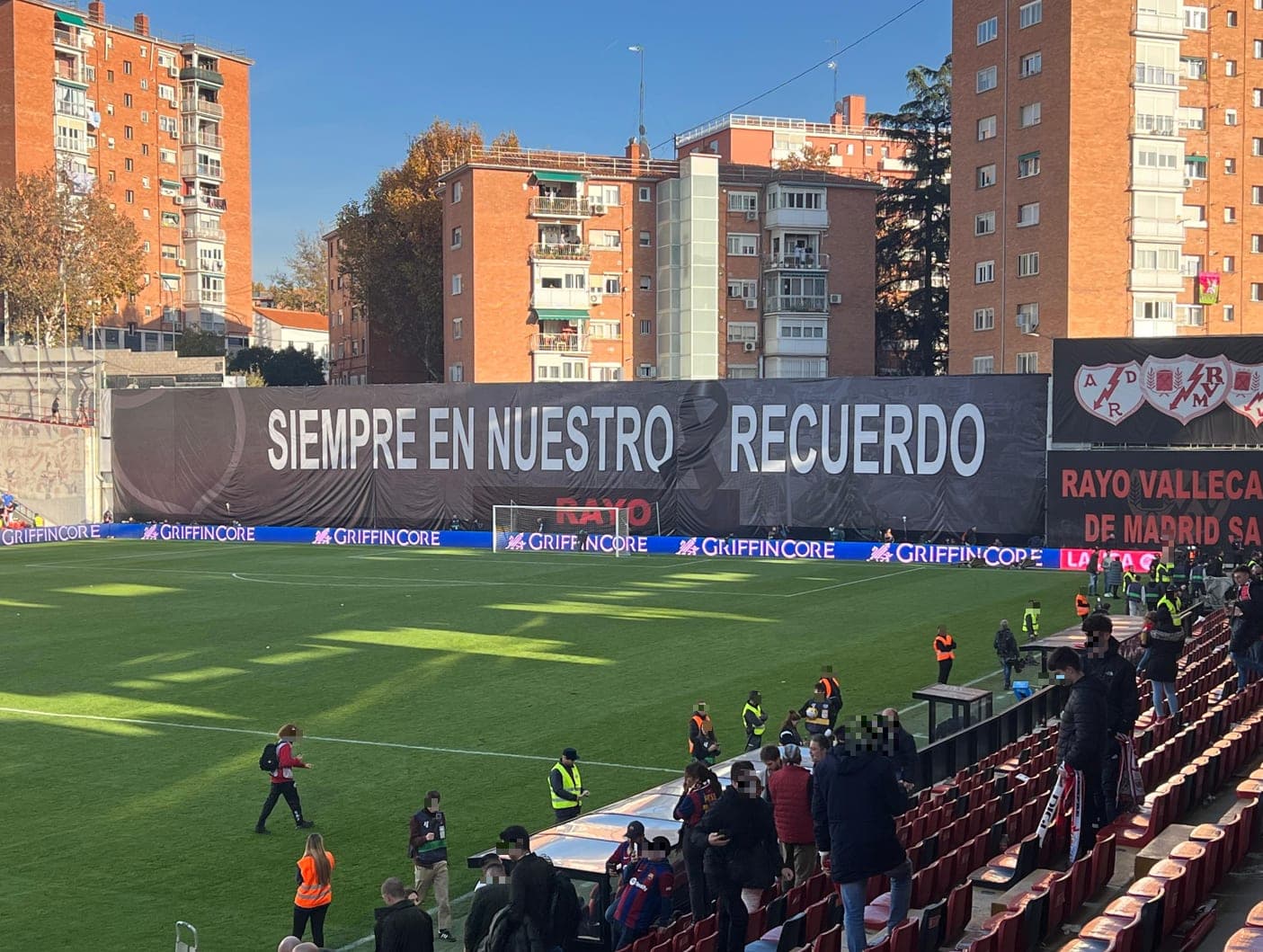
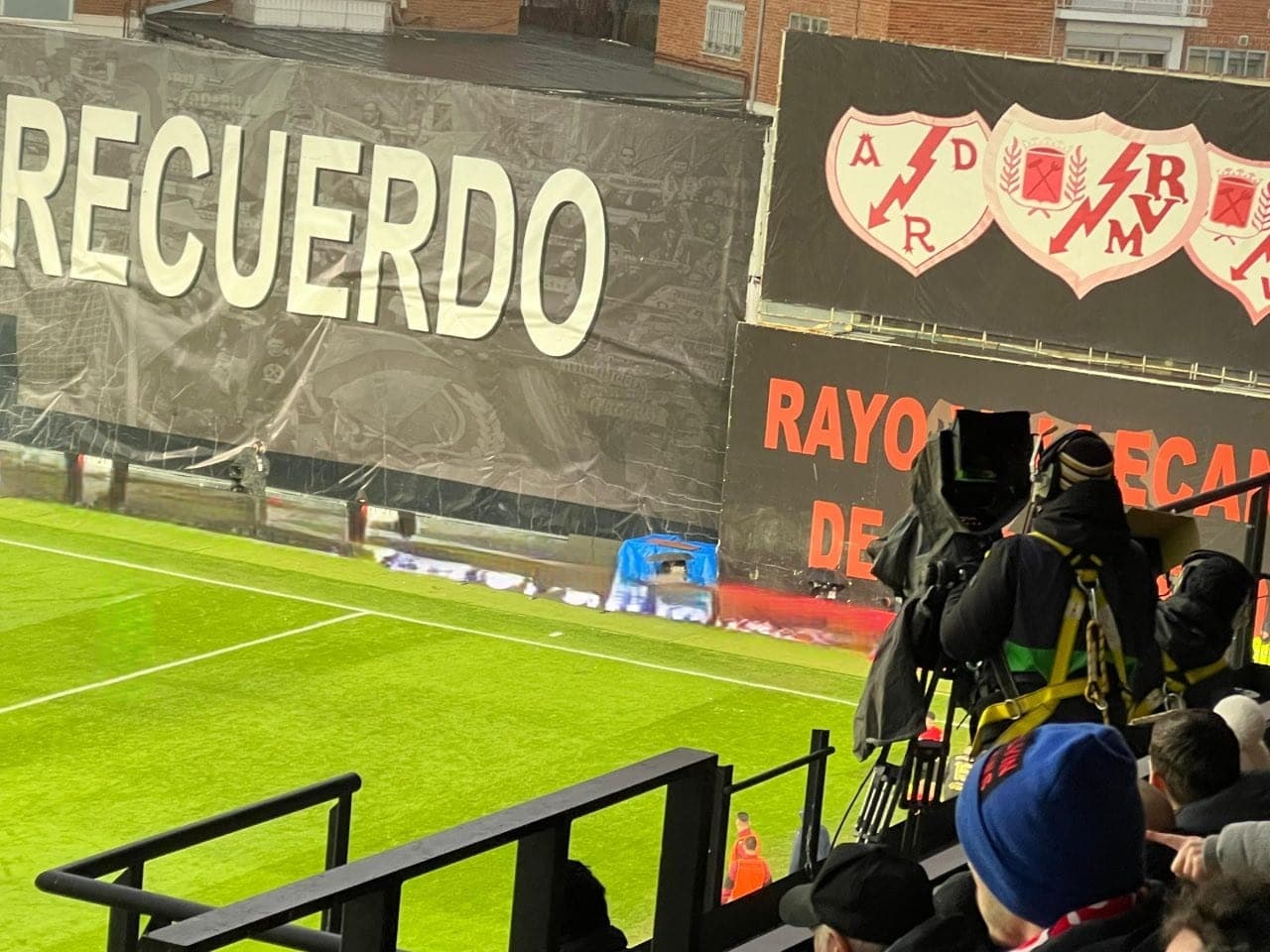
The inscription 'Siempre en Nuestro Recuerdo' beneath the stand is a tribute to the many Vallecano supporters who lost their lives during the Covid-19 pandemic. Vallecas was one of the neighbourhoods hardest hit by Covid. As people here, particularly those from the working class, were constantly travelling to their workplaces, a significant number were infected with the virus.
One of the stadium's most interesting features is that there is no car park! This is because the stadium is very old, and no provision was made for a car park when it was built. Entrance to the stadium is via Calle del Payaso Fofo, where the main entrance gate is located. The team coaches park at the so-called 'VIP Entrance' on this street.

If you'd like to get an autograph or a photo with the players after the match, you'll need to wait on this street. As soon as the players leave the stadium, they come out onto this street and board their team coaches from there. A police cordon is also set up here. If you're lucky, your favourite player might take a few steps towards you before getting on the coach, allowing you to take a photo.
There's another interesting feature of this street. Whilst the away team's players arrive by team coach, Rayo Vallecano's players arrive in their own cars. As there's no car park at the stadium, the players park their cars on this street. Madrid is a place where parking is a problem, but as the police close this street to traffic, the players are able to park their own cars here. This can create quite a comical scene because on match day, you suddenly see a whole host of luxury cars parked on this old, narrow street. You might spot Porsches, Ferraris and Bugattis.
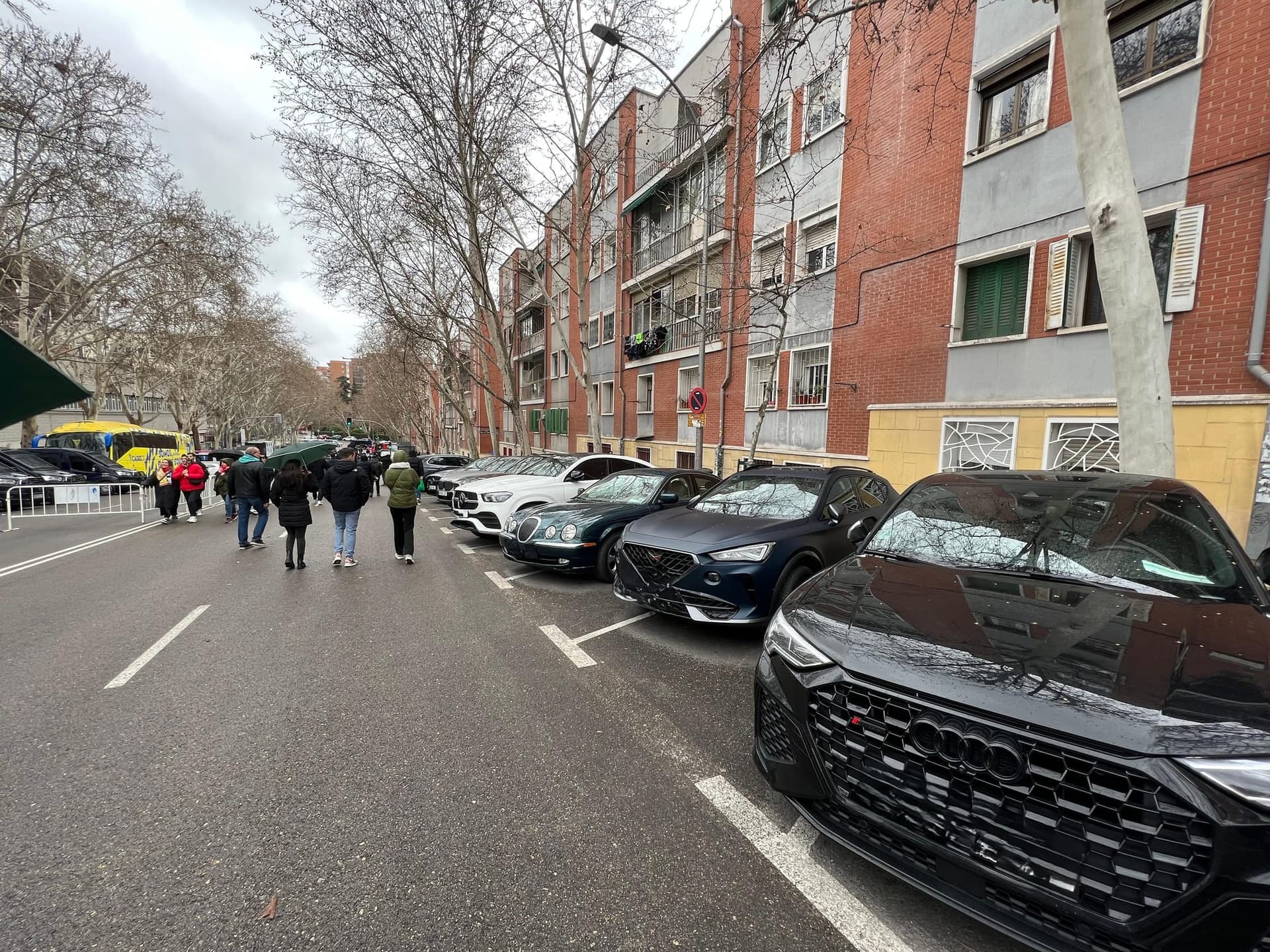
That's just how closely Rayo Vallecano is intertwined with its neighbourhood!
How to Buy Rayo Vallecano Match Tickets
Rayo Vallecano boasts a rather romantic set of supporters. This romanticism has, to some extent, rubbed off on the club itself. Because it's not possible to buy Rayo Vallecano match tickets online!
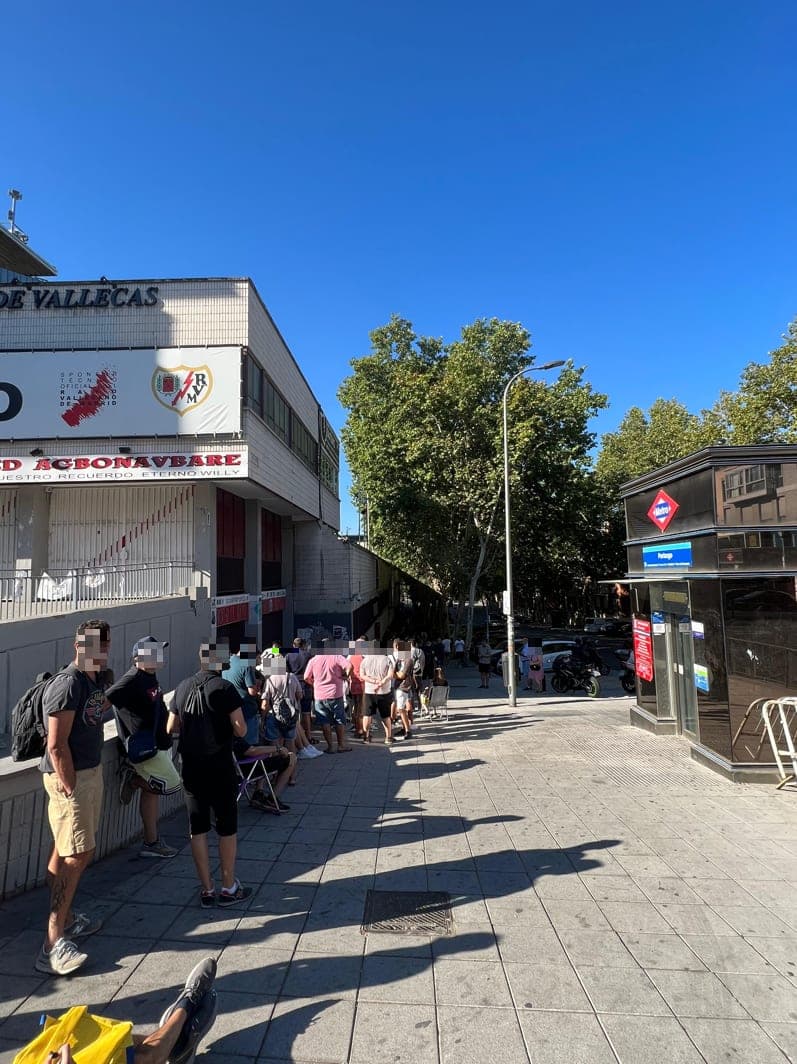
If you want to go to the match, you must head to the stadium a few days before the game, queue up just like in the 90s, and collect your ticket. The dates when match tickets go on sale are published on the club's official website.
Rumour has it that the club wanted to switch to an electronic system, but the supporters opposed this because they feared the ticketing staff would be made redundant and some people would lose their jobs. Besides, season ticket holders already make up the overwhelming majority of the stadium's attendance.
Getting a season ticket is a whole other ordeal. People queue up the night before to get one of the limited number of tickets on sale. The queue can stretch for kilometres, and even after all that waiting, it's not certain you'll actually get a ticket. That's because the tickets might run out before your turn comes round.
Of course, apart from this, it is also possible to find people on certain online platforms who are willing to rent out their season tickets. In this case, the responsibility lies entirely with you. It's worth being careful. Because Rayo Vallecano season tickets don't have things like QR codes. They're old-style chip cards. The season ticket holder's full name is printed on the card. You scan this card upon entry to gain access. So, if you're going to rent someone's season ticket, technically you'll need to physically collect that person's season ticket card. If it were me, I wouldn't give my own season ticket card to someone else: after all, there's no guarantee they'll return it. However, this is a matter of trust.
How to Get to Vallecas Stadium?
To reach Vallecas Stadium, you need to take the No. 1 metro line towards Valdecarros and alight at Portazgo station. Although every corner of the stadium is a nightmare and a hassle, perhaps the easiest part about this stadium is actually getting there.
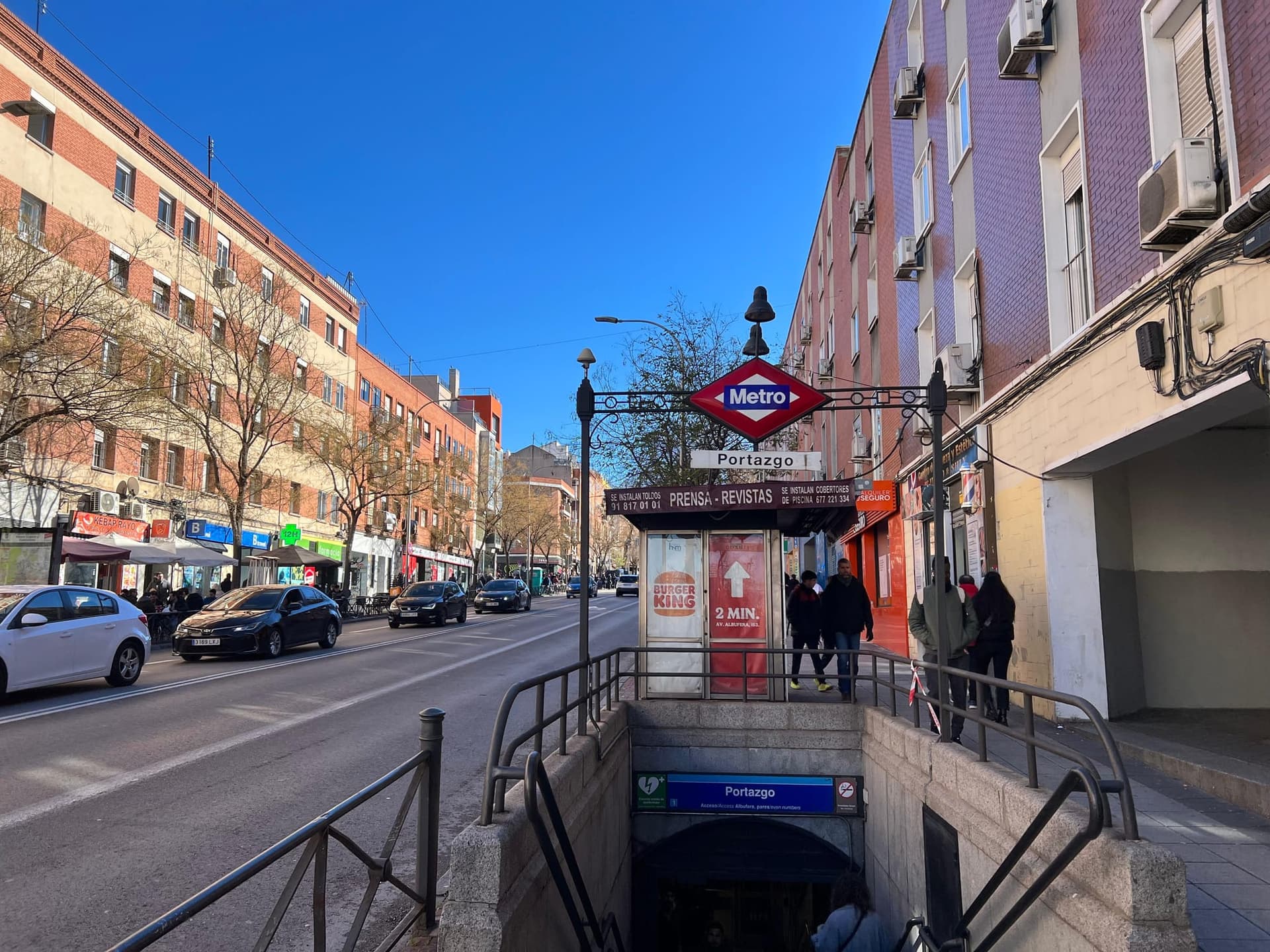
If you take the metro from Sol station, you can reach the stadium in 20–25 minutes.
On match days, if the kick-off time is approaching, getting off the metro and making your way out of the station can take quite a while. If you enjoy a good walk, you can get off at the previous stop, Nueva Numancia, grab a cold beer from a local shop and walk to the stadium. Just a word of warning, though: it's a slight uphill climb. If you find hills a bit of a struggle, it might be a bit of a slog.
Rayo Vallecano Pre-Match Atmosphere
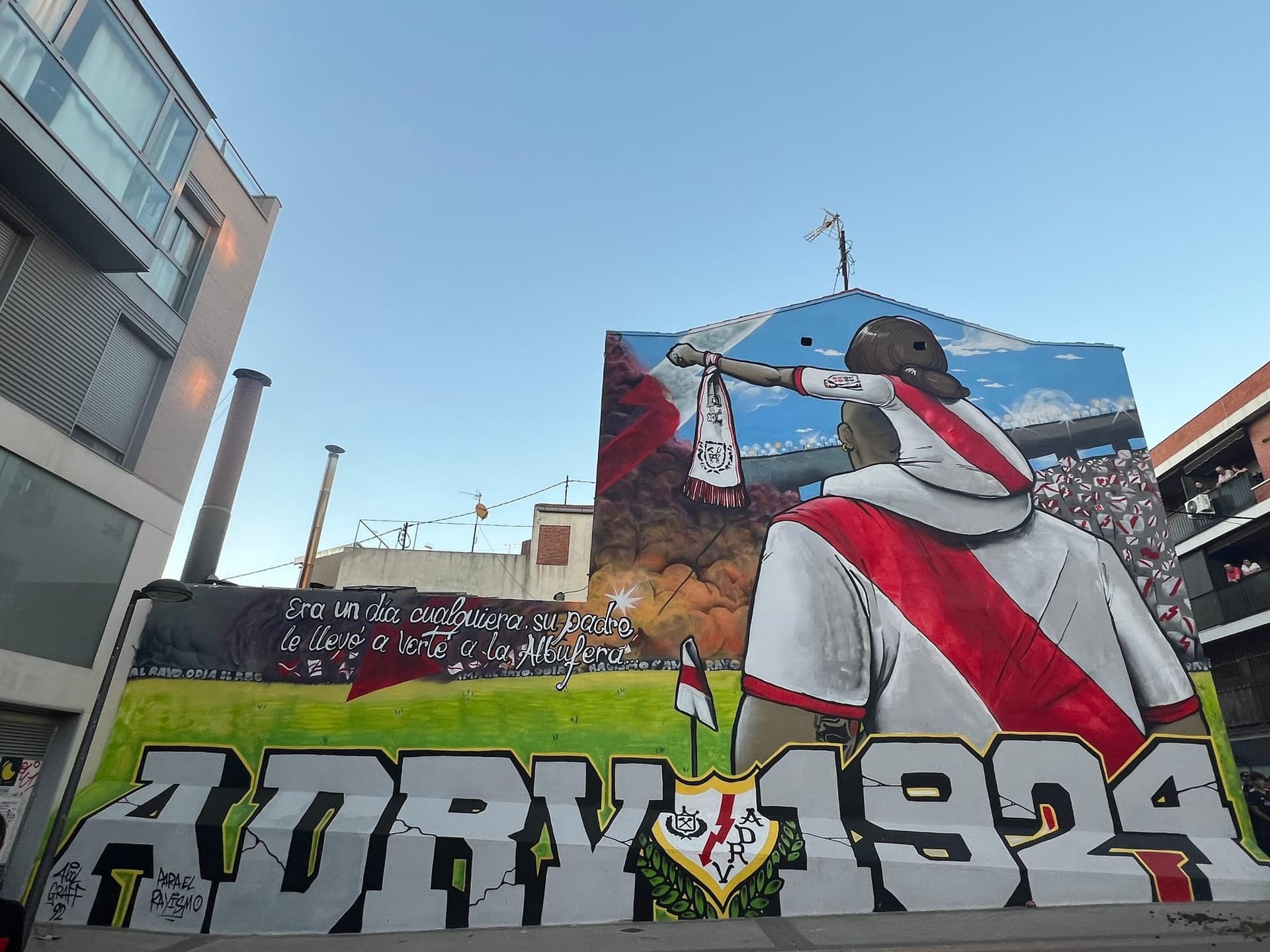
Rayo Vallecano supporters gather around the stadium before the match. There are two main meeting points. The first is Josefa Diez Street, which is also home to the iconic Bukaneros mural. As you walk further down this street, you'll start to see the crowd.
The Mercado de Numancia and the area in front of it are common gathering spots. Here you can see the Ultra groups. They start gathering from the early hours of the morning. Torches are lit, beer is drunk and songs are sung. If you do go there, please do not take photographs or videos of the Bukaneros supporters in particular. If they see you, as a tourist, taking their photograph, they won't be pleased and things could get unpleasant. They might ask you to put your phone away or delete the video. It's best to be respectful.
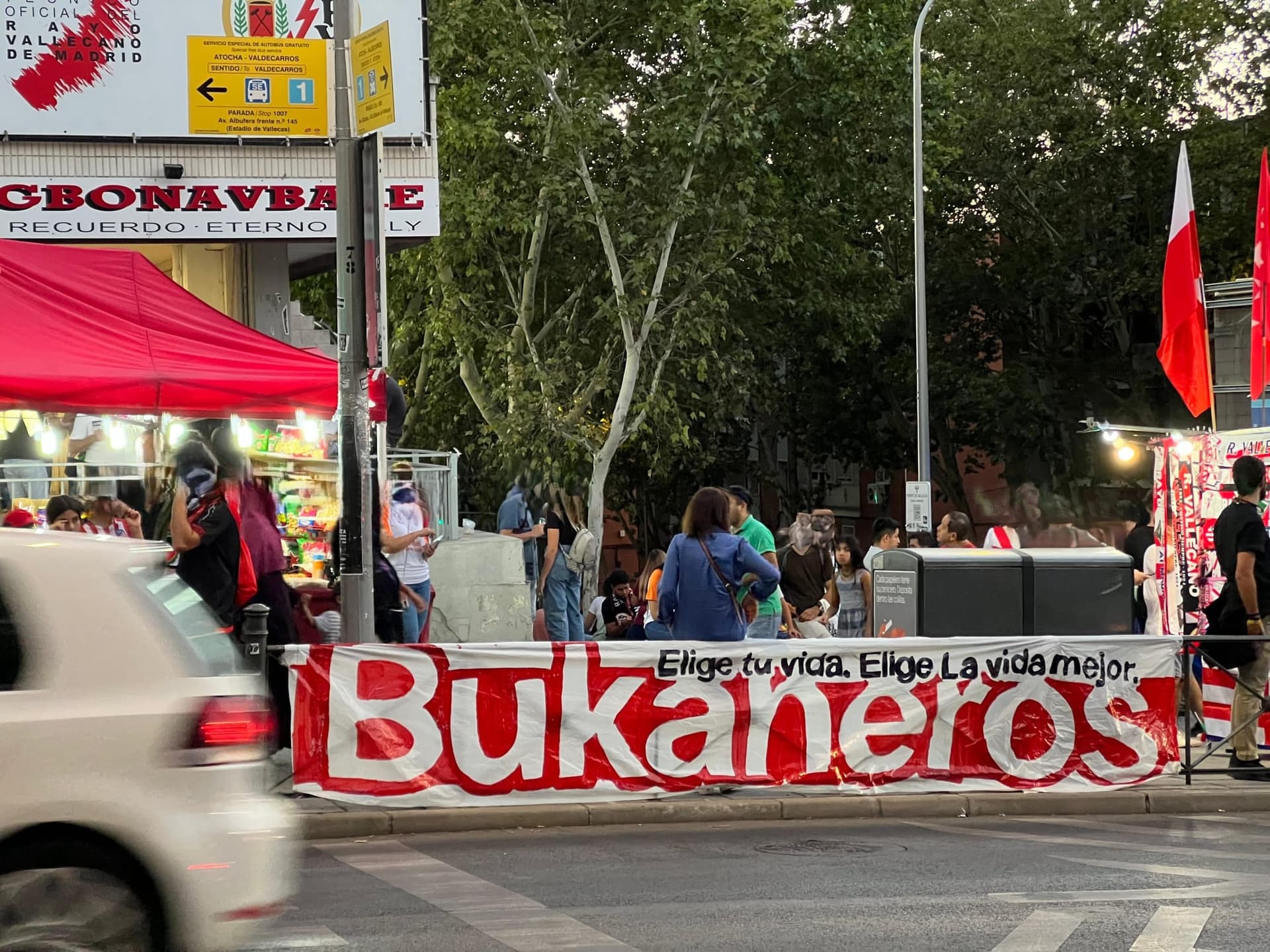
You may also spot people here and there in Pico de la Maliciosa Park, located just behind this market.

Another gathering spot is Juan José García Espartero Park, situated on the west side of the stadium. Whilst not as crowded as the Mercado de Numancia, you may still spot people here. Again, it's best not to take photos of people in these areas, or at least to ask their permission first.
The pre-match atmosphere in Vallecas is always lovely. If you walk down the main road next to the stadium, where the metro station is, you'll see people drinking beer or eating in the side streets on the left. You can buy a drink from any shop and join them whilst standing. Although drinking beer outdoors on match days is technically illegal, the police don't usually take any notice.
Vallecas Stadium and Stands
There are three stands at Vallecas Stadium: Preferencia, Fondo and Lateral.
Fondo is the stand behind the goal where the 'Bukaneros' ultra group is based. The supporters in this stand sing chants throughout the match and never stop cheering on the team. If you've bought a ticket here, don't expect to sit down and watch the match in peace.
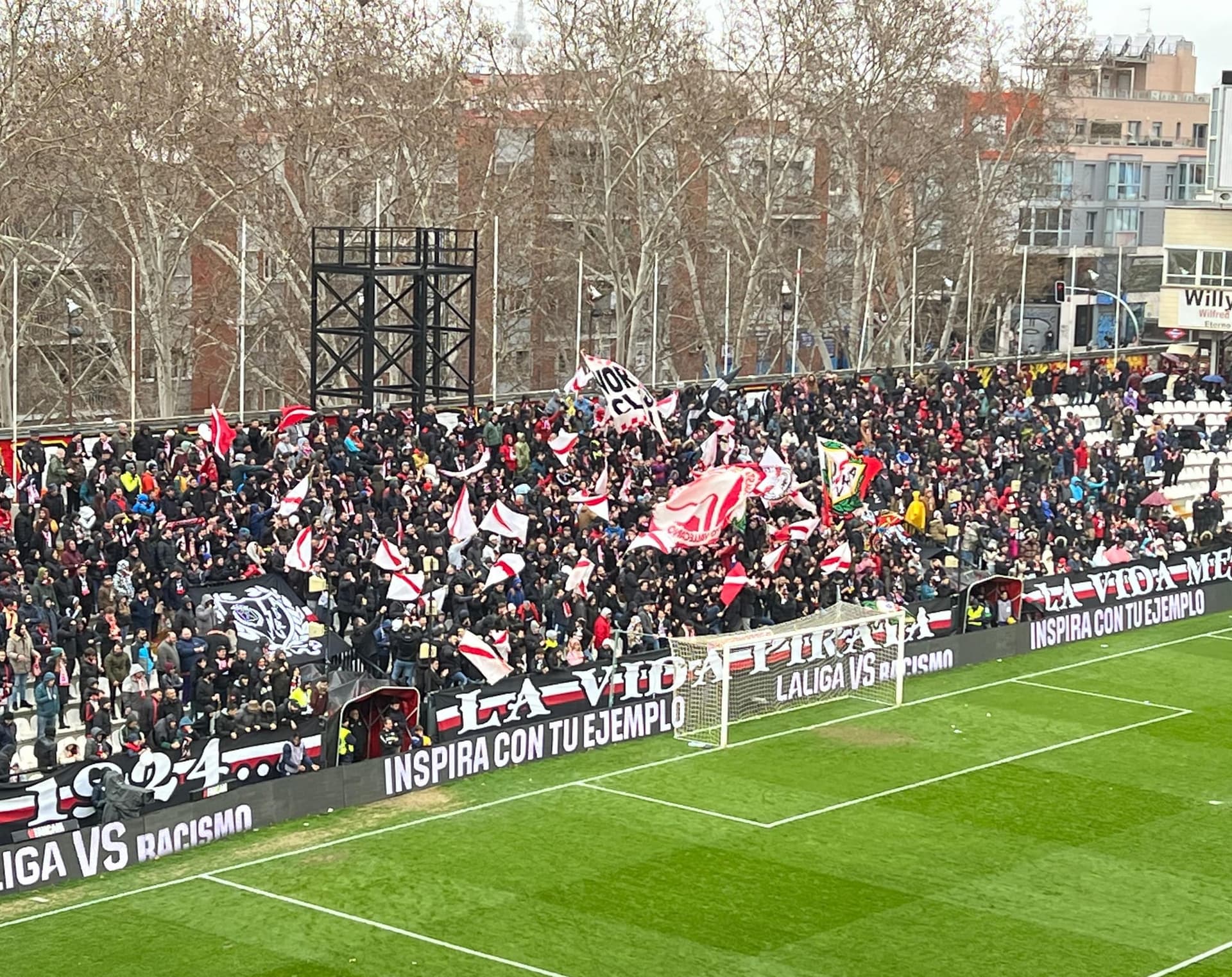
The Preferencia and Lateral sections, on the other hand, are stands where people mostly watch the match whilst seated. The substitutes' bench and the VIP stand are located in front of the Preferencia.
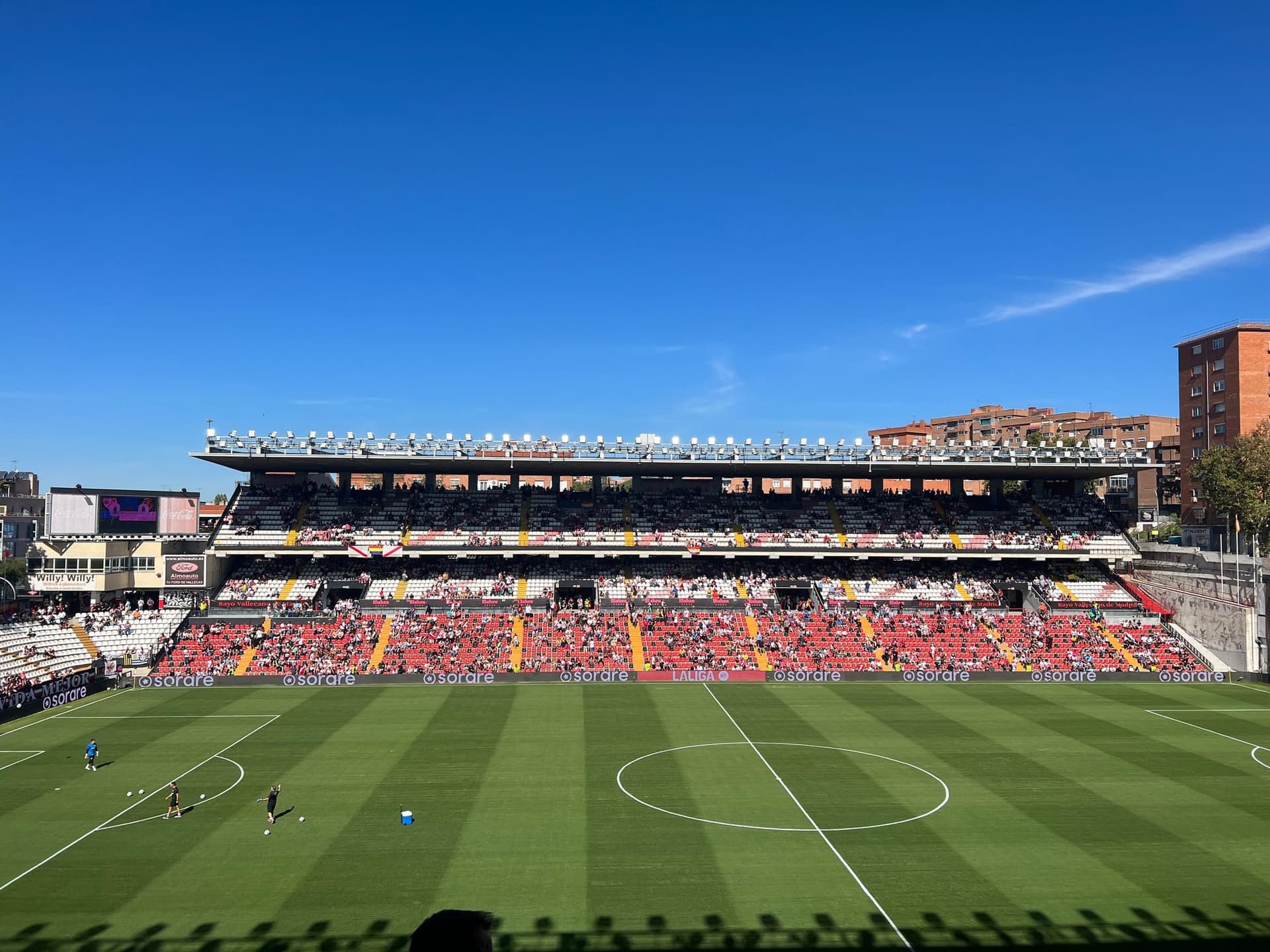
The Lateral baja section of the Lateral stand, that is, the side closest to the pitch, is not covered. The roof does not extend to that section. If rain is forecast, you may need to bring a raincoat or an umbrella.
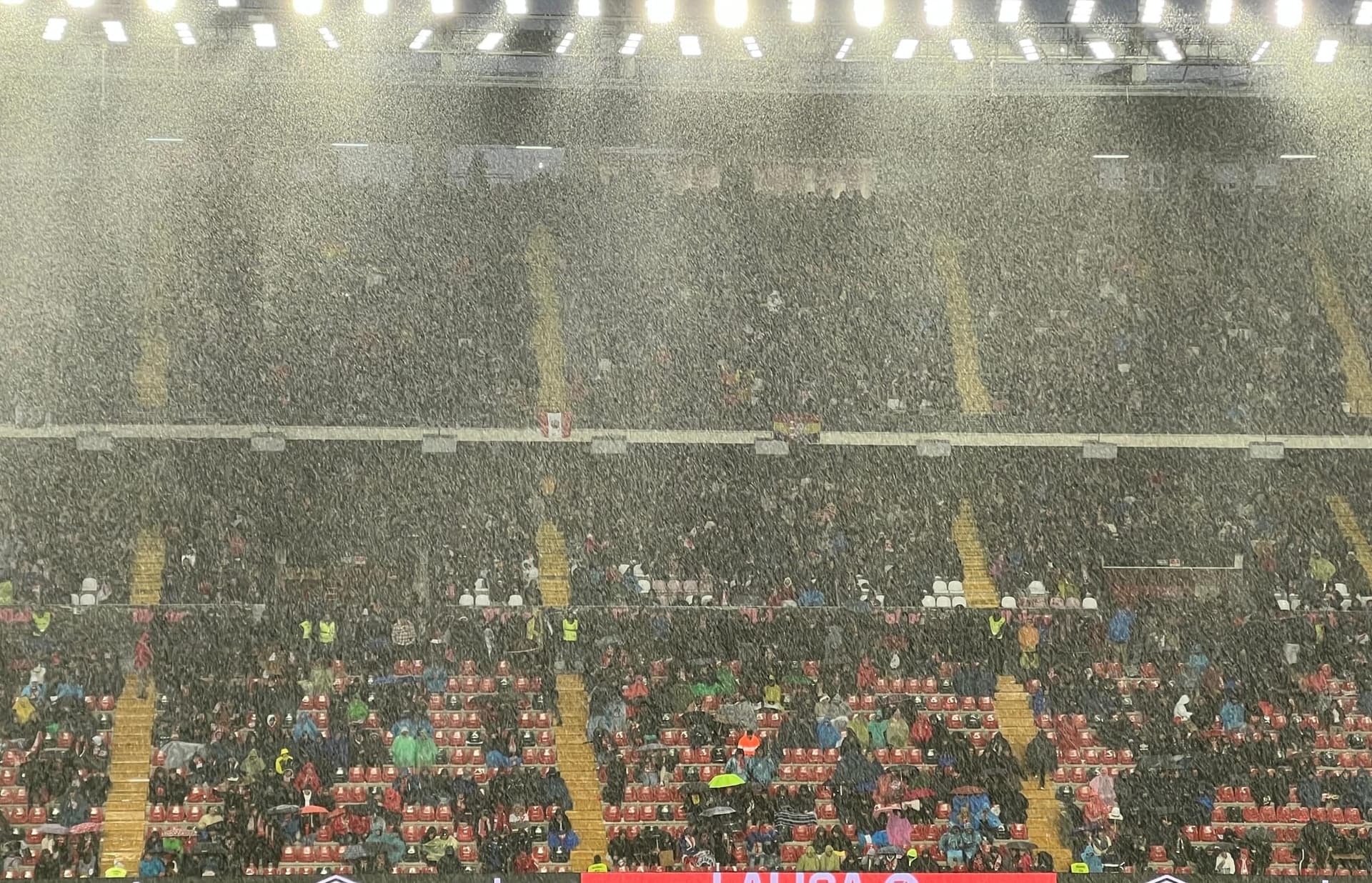
A very important detail: There are some blind spots on the right-hand side of the Alta Preferencia section. The area where the live broadcast camera is positioned restricts the view for people in that part of the stand. The restricted area isn't very large, but the action on the left-hand side and in that area isn't clearly visible, which can be rather annoying.
Similarly, when sitting in some seats at the back of the 'Alta Preferencia' section, it can sometimes be difficult to see the front goal line. Standing up may give you a full view, but sitting down can be problematic.
There is a canteen inside the stadium where you can buy non-alcoholic drinks, but I'd say it's rather limited. You can get crisps and sunflower seeds. However, I'd recommend bringing your own food.
The tradition of eating a sandwich at half-time is also practised here, just as it is in other Spanish stadiums.
Vallecas Stadium Entrances and Exits
One thing to bear in mind is that this is a rather old stadium. Entrances can sometimes be problematic; you may come across turnstiles that aren't working. Although it can be a bit of a nuisance, entry is actually quite quick. They don't check the names on the tickets. As the turnstiles are old, the ticket holder's name doesn't appear on the screen anyway. Consequently, we could say that ticket checks are rather lax. At the entrance, the police carry out a brief pat-down. This is standard practice throughout Spain. If you're carrying a drink, you'll be asked to remove the lid before entering. The best solution is to remove the lid from another drink beforehand and pop it in your pocket.
Exiting the stadium is much quicker than entering. As all the gates are open, you can leave with ease. Incidentally, once the match is over, if you're in the upper stand, you can easily make your way down to the lower stand and the area where the substitutes' benches are located.
Quick Checklist
- Rayo Vallecano supporters generally identify as left-wing.
- Transport is easily accessible by metro.
- There is no car park at the stadium. Those travelling by car will need to find car parks in the surrounding areas or park around the stadium.
- Match tickets are not sold online. They can be purchased individually at the stadium.
- Entry and exit from the stadium are quick. There are small refreshment stands inside the stadium, but they do not offer a wide range of food and drink.
- Please do not take photographs or videos of the Ultra groups in the pre-match gathering areas.

Related reading
 Fan Culture
La Vida Pirata, La Vida Mejor: Rayo Vallecano and the Bukaneros
A working-class corner of Madrid, a club founded by socialists in 1912, and the terrace that still refuses to let football become a product.
 Guide
GuideWatching Real Betis in Sevilla: The Complete Matchday Guide for La Cartuja (2026-2027)
Tickets, transport, where to drink, where to sit and what actually happens inside, a first-hand guide to following Real Betis at La Cartuja while the Villamarín is rebuilt.
 History
More Than a Rivalry: Understanding Sevilla vs Real Betis, El Gran Derbi
People who actually live in Sevilla don't call this derby “El Gran Derbi.” A city that has always loved splitting itself in two, and the football rivalry that came out of it.